










































Product features
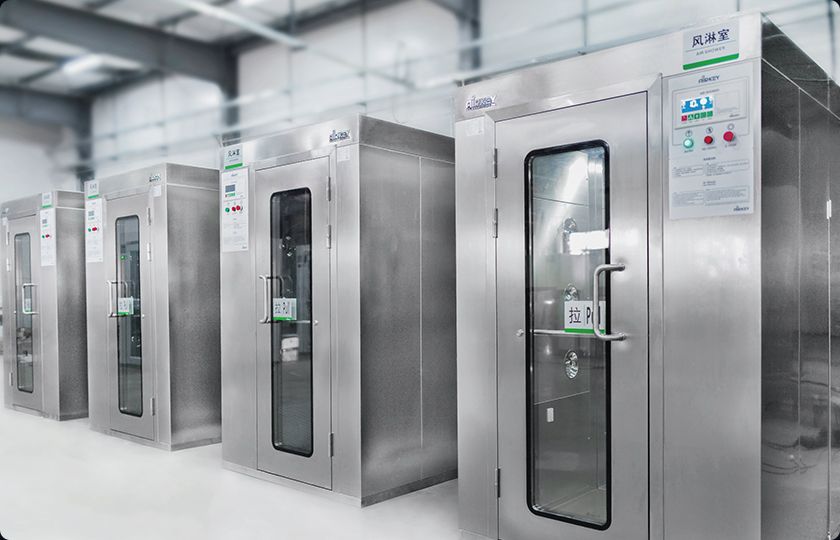
Effective dust removal
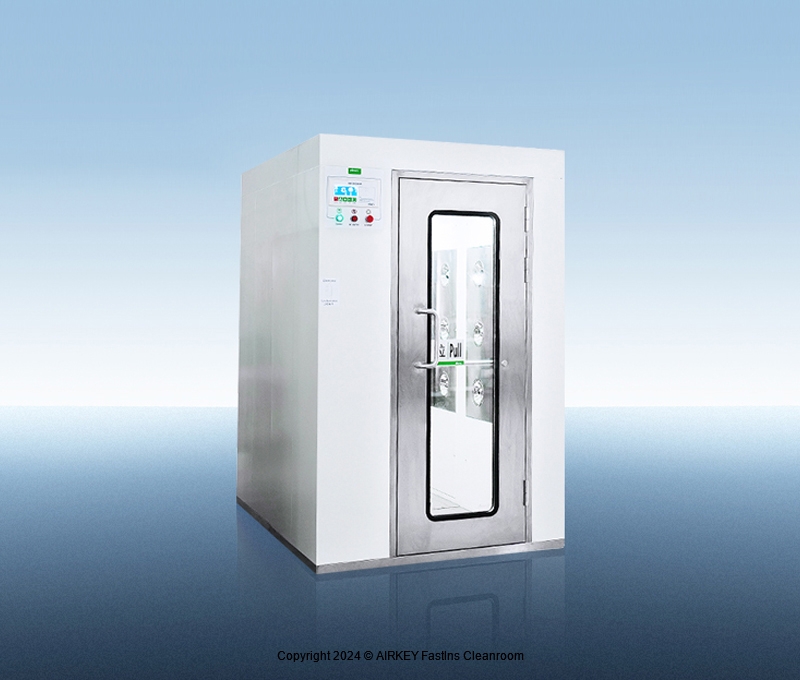
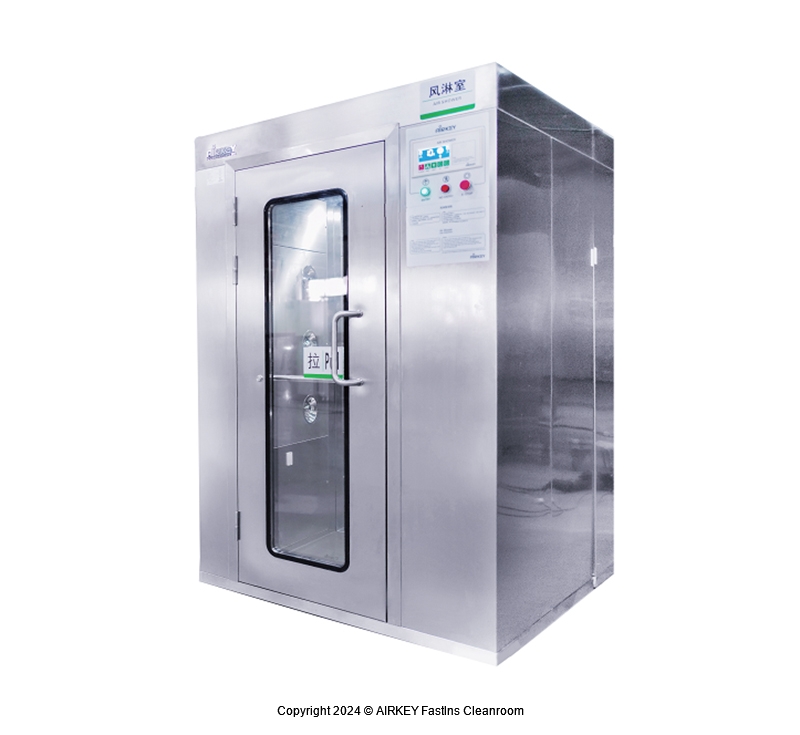
High velocity fan effectively removes dust from personnel
Interlocked doors to avoid cross contamination
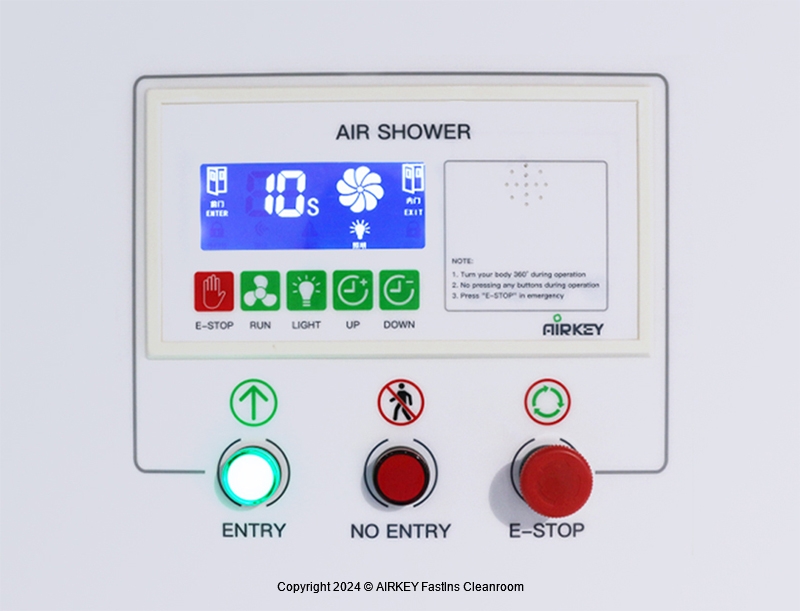
Automatic air shower, intelligent control
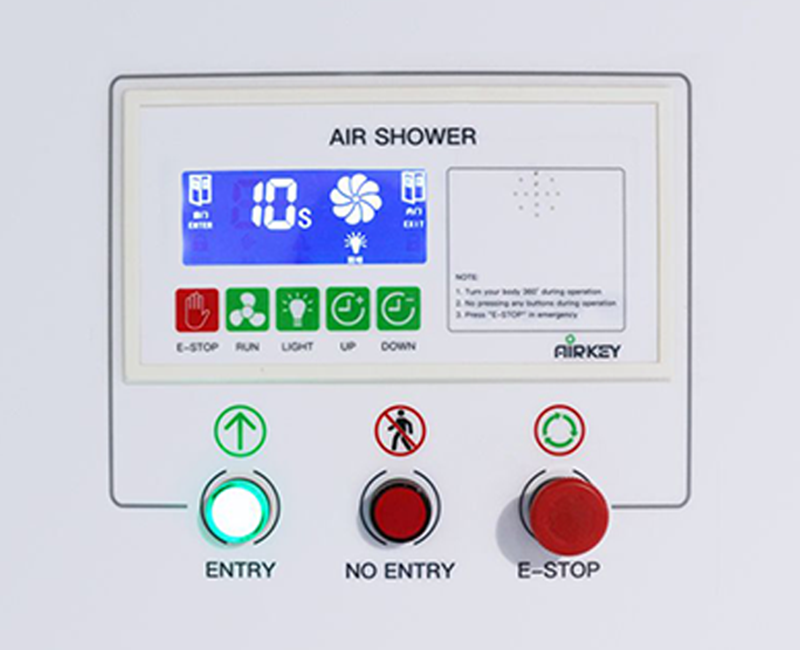
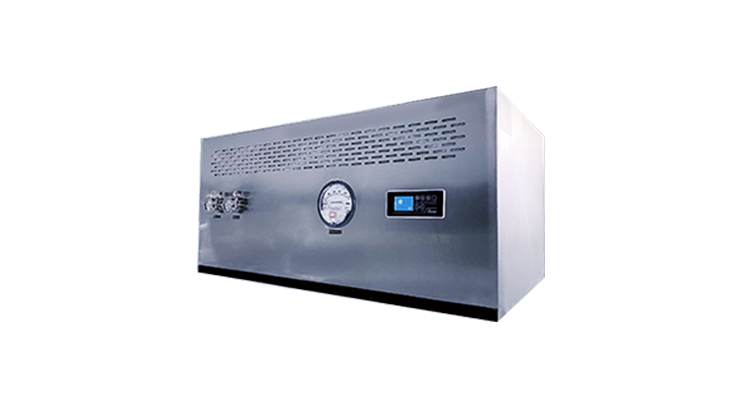
Intelligent control panel
Indicator for interlocked doors
Lighting control
Adjustable air
shower time
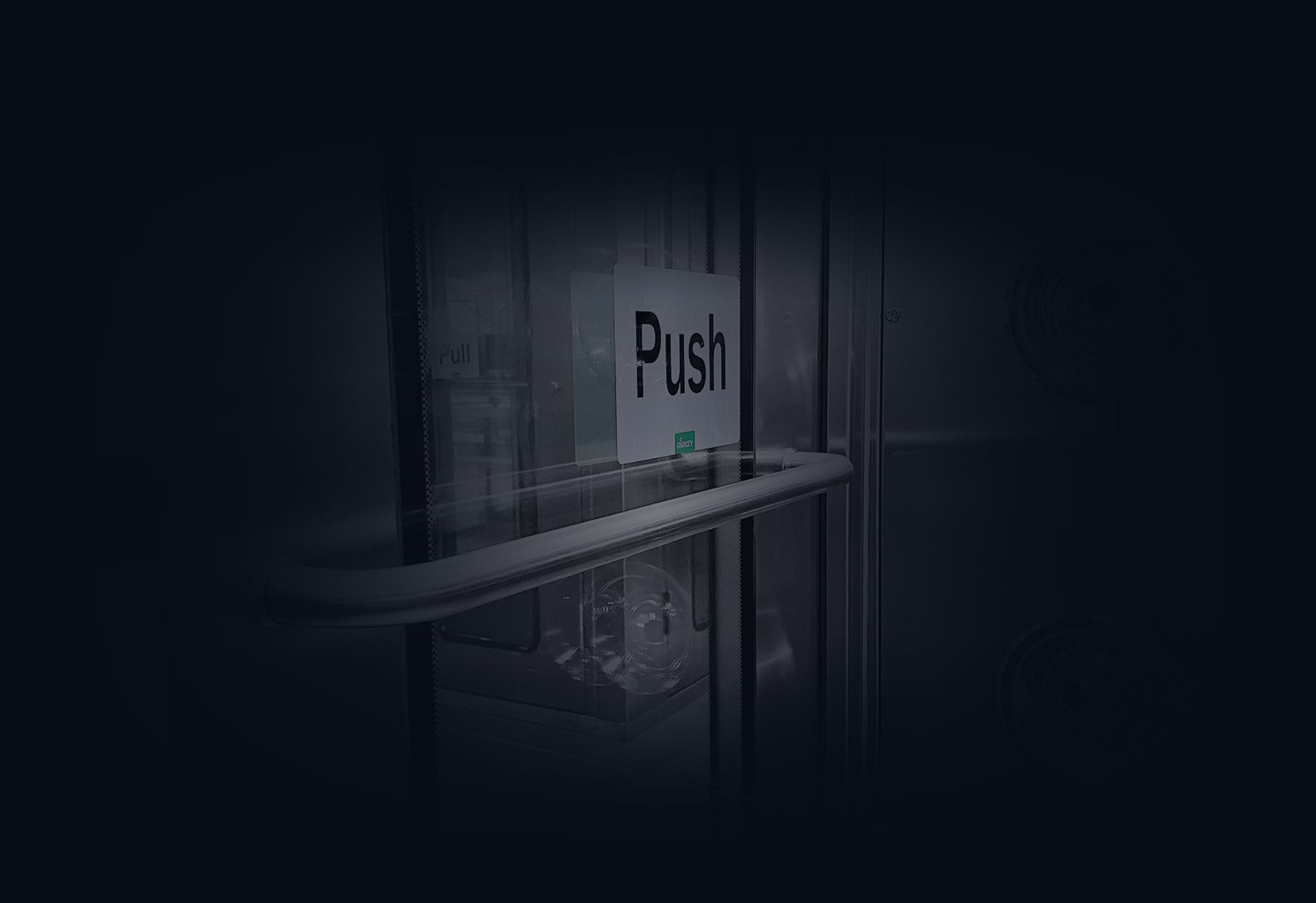
Structures
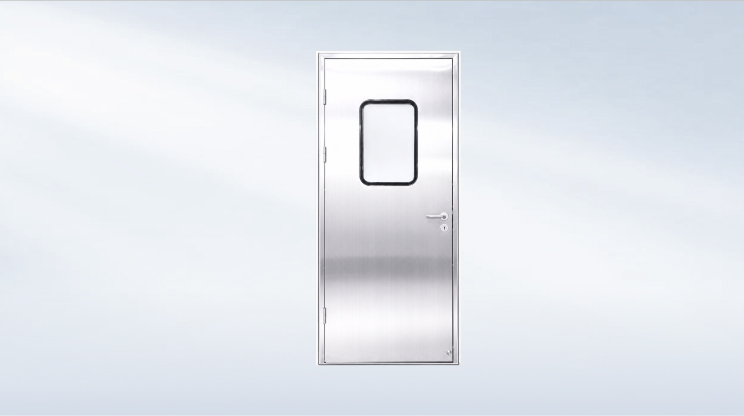
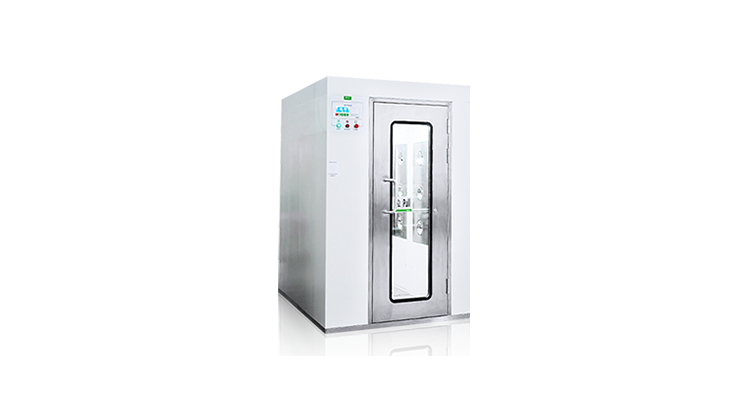
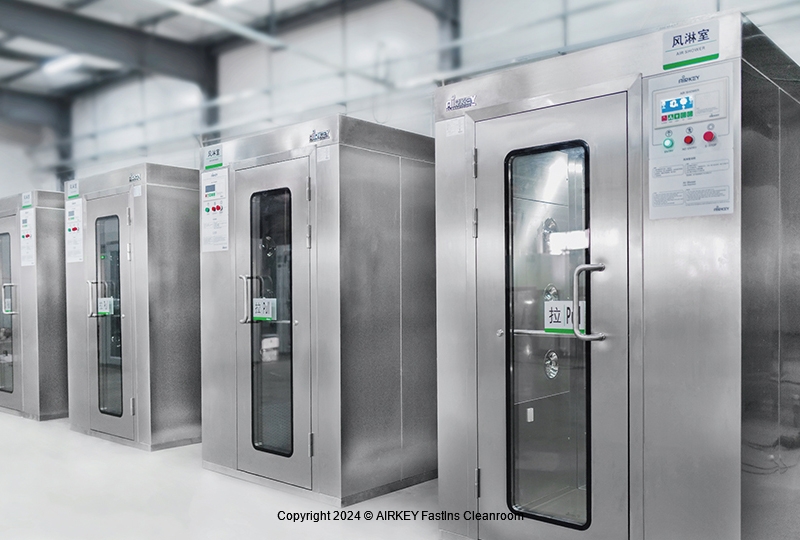
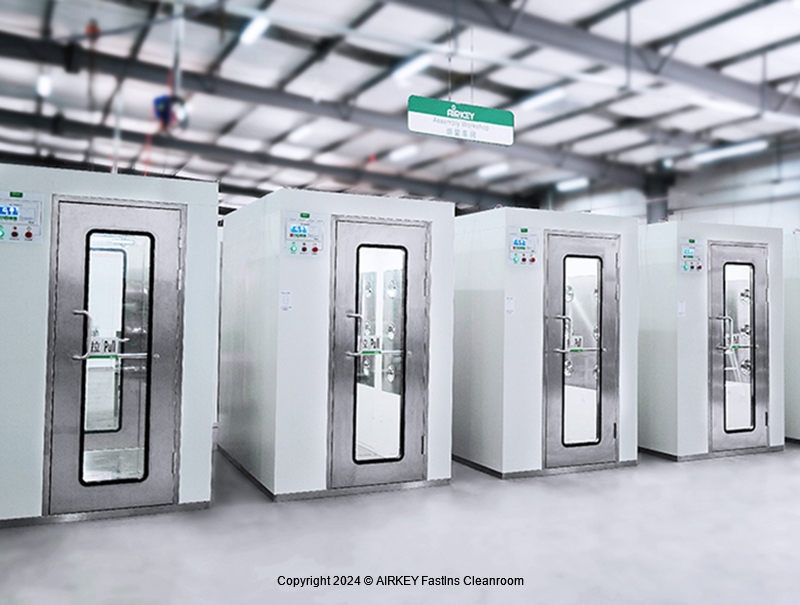
Stainless steel door with glazed glass window
Beautiful and durable
Ergonomically designed
Handles for push and pull
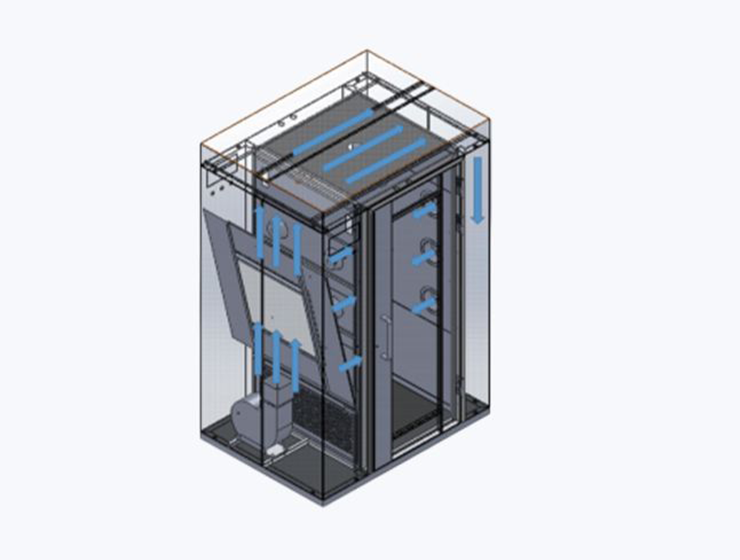
Operating Principle
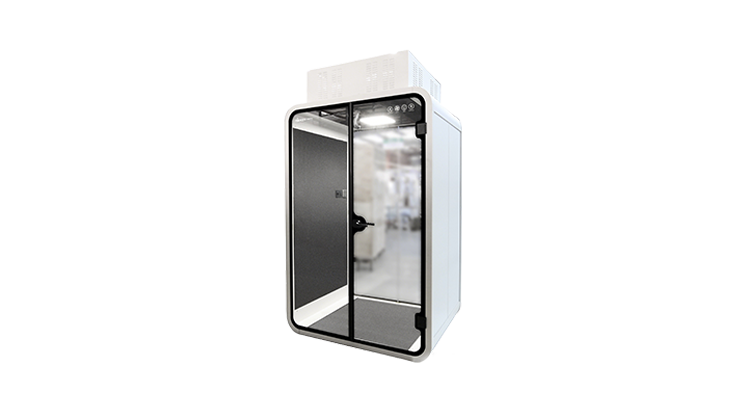
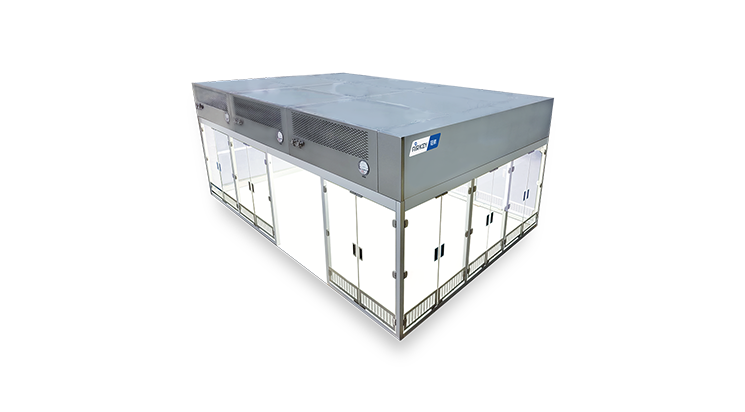
When personnel get into air shower, infrared inducted air shower activates automatically and the doors are locked until completion of the decontamination. In this process, blower gets the air to pass pre-filter and then HEPA filter, to provide high velocity air through the adjustable stainless nozzles, removing dusts attached to the personnel, thus avoiding cross contamination.
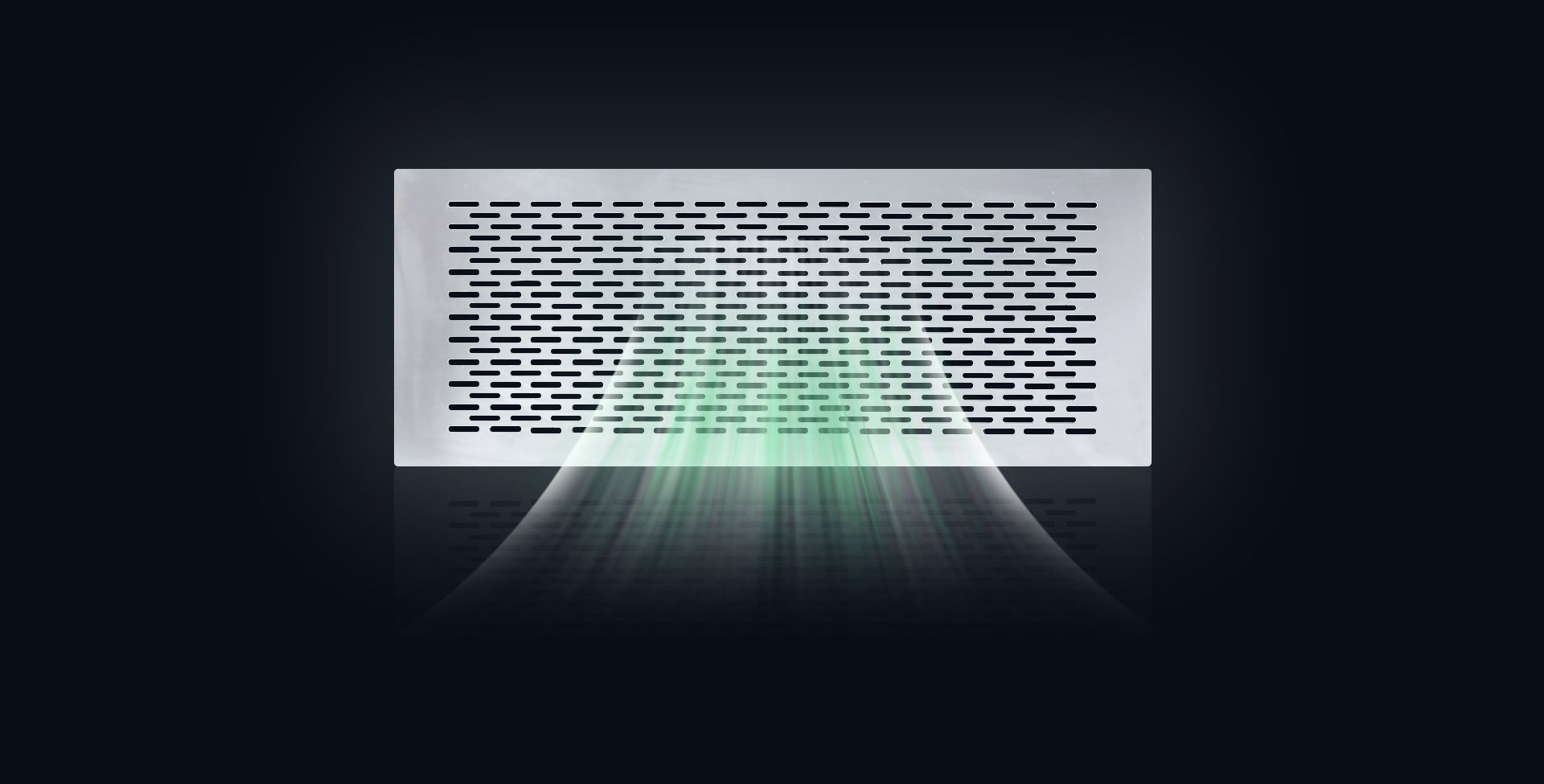
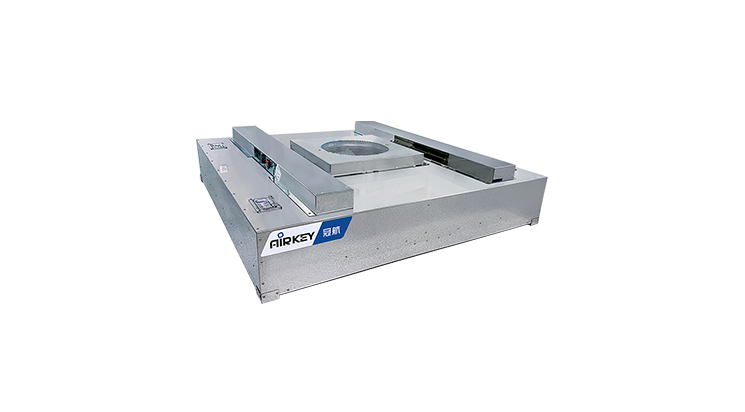
High velocity fan and two-stage filtration system Self-circulation, effective dust removal
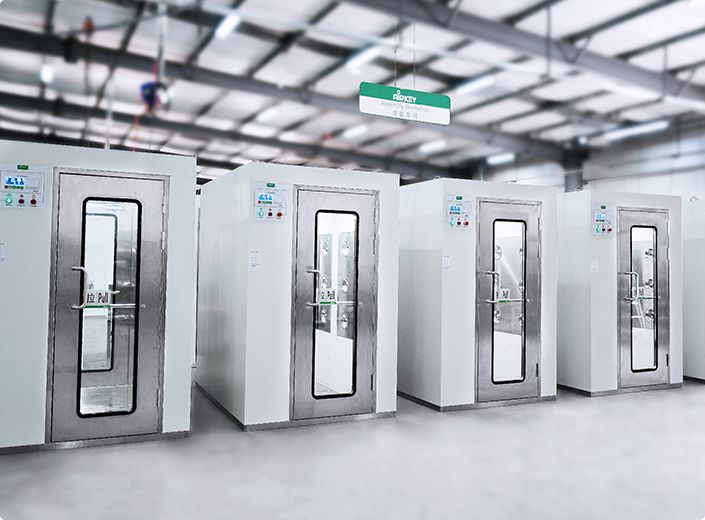
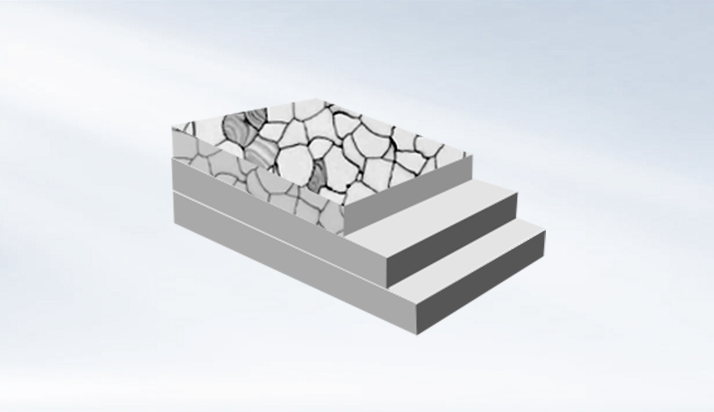
Various metal materials optional,as you wish
Size and layout can be customized
Quick installation,plug-in-and-run
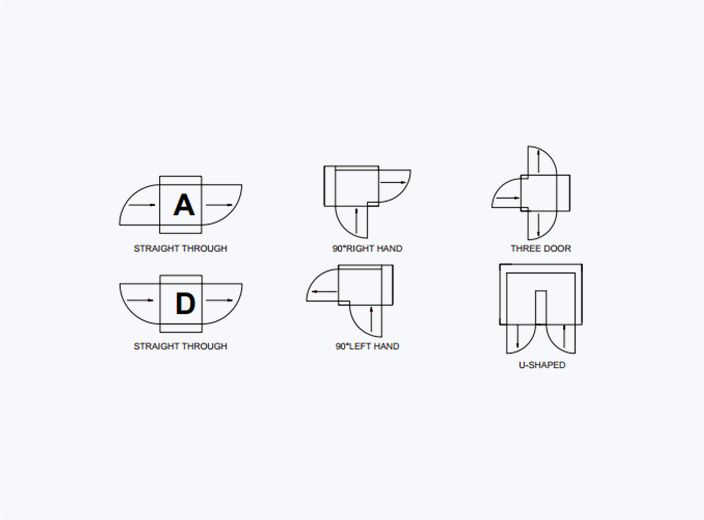
Single-phase,U-shaped air shower,all available
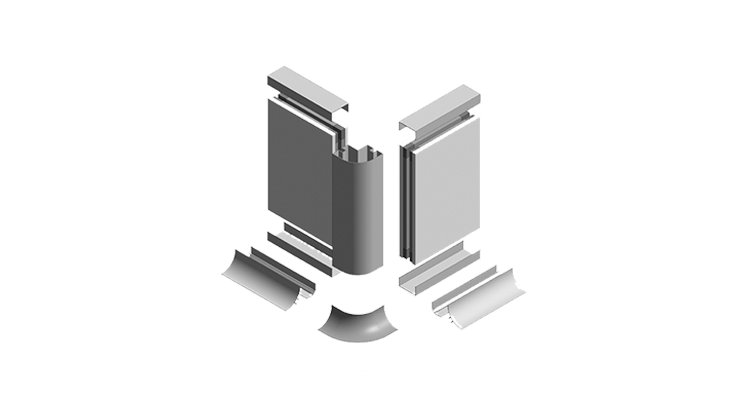
Straight,left/right turn,three-way,all optional
Specification
| Model | AS-1360-1 | AS-1360-2 | AS-1360-3 | |
| External Dimension | W1360*D1000*H2145mm | W1360*D2000*H2145mm | W1360*D3000*H2145mm | |
| Internal Dimension | W790*D920*H1920mm | W790*D1920*H1920mm | W790*D2920*H1920mm | |
| Air Velocity | 20-25m/s | |||
| HEPA Filter |
Size | L570 * W570 * H69mm | ||
| Qty | 1 piece | 2 pieces | 3 pieces | |
| Efficiency | H14, 99.995% at 0.3μm certified with ISO Standard 29463 and EN Standard 1822 | |||
| Voltage | 3P/380V/50Hz or 3P/220V/60Hz | |||
| Blower | Specification | 2840r/min Centrifugal Blower | ||
| Qty | ||||
| 1 piece | 2 pieces | 3 pieces | ||
| Max. Consumption | 1120W | 2240W | 3360W | |
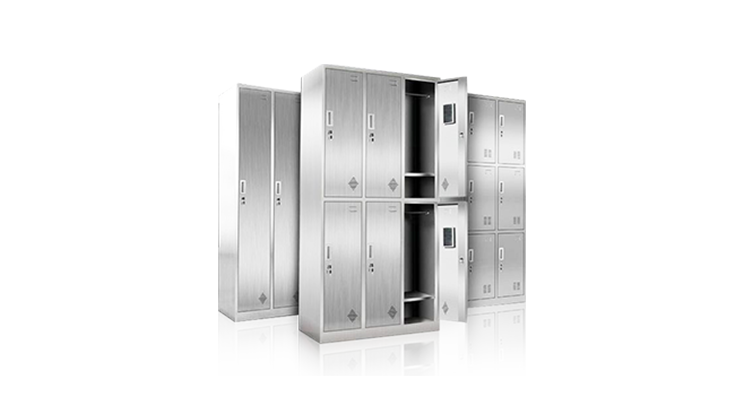
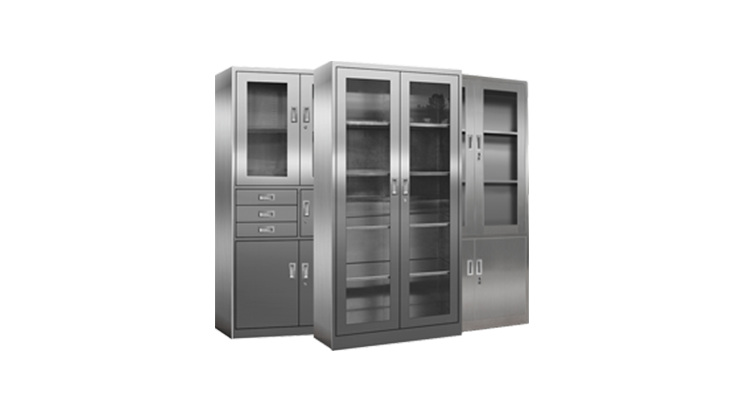
| Enclosure Material | Stainless Steel or Powder Coated Steel | |||
| Qty of Nozzles | 12 pieces | 24 pieces | 36 pieces | |
| Door | Specification | Stainless steel frames with double-sided tempered glass | ||
| Qty | 2 pieces | 2 pieces | 2 pieces | |
Gallery
Related products
Recent Projects
ISO 5 Modular Cleanroom Manufacturer for Medical Research in Singapore
ISO 7 Modular Cleanroom Manufacturer for Pharmaceutical Packaging in the USA
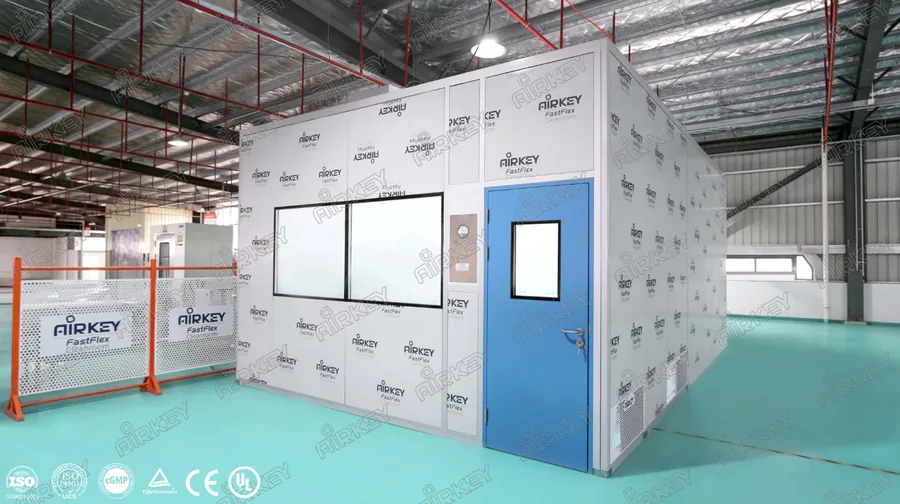
ISO 6 Modular Cleanroom Manufacturer for Optical Component Production in Germany
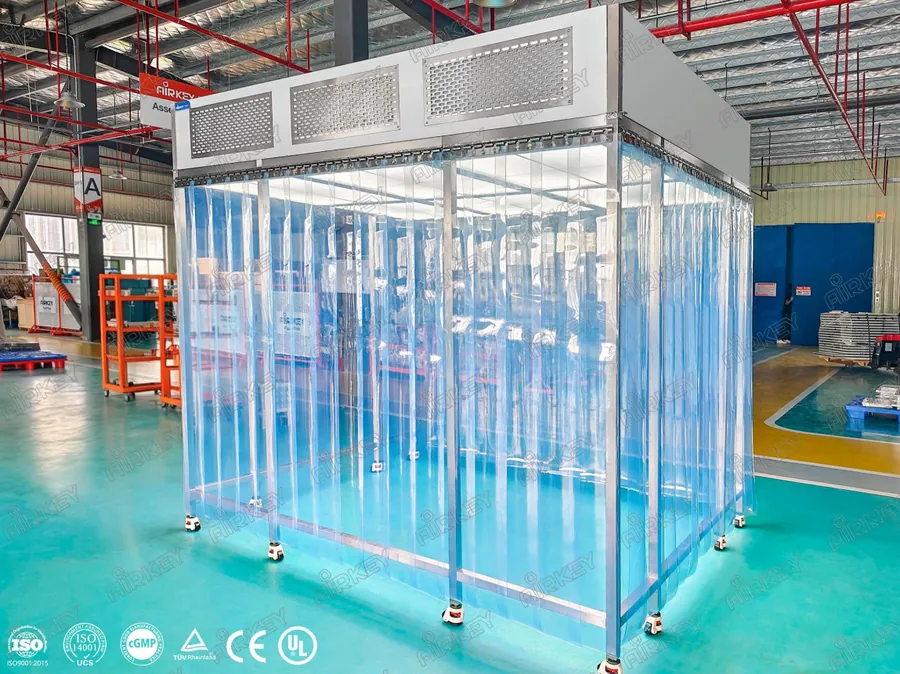
GMP-Compliant Laminar Airflow Hood for Pharmaceutical Manufacturing in Australia
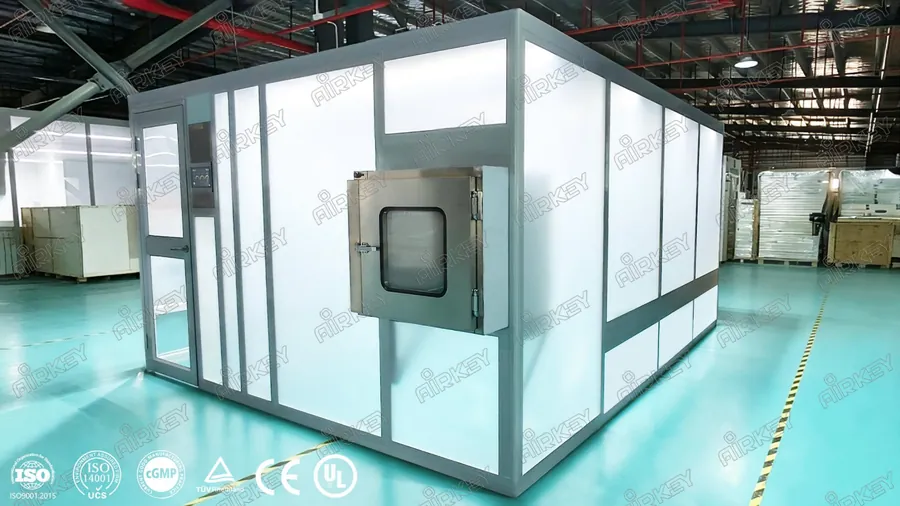
ISO 6 Modular Cleanroom Manufacturer for Cell Technology Research in Oman
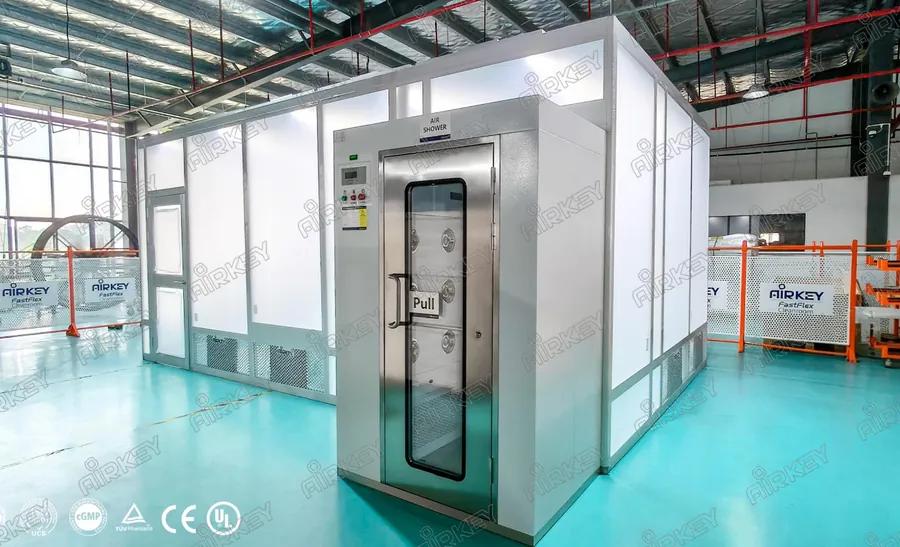
ISO 5 Modular Cleanroom Solution for Peptide Production in the USA
Frequently Asked Questions

1. Why do cleanrooms need air showers and the importance of air shower?
The main reason for installing an air shower in a cleanroom is to prevent pollutants carried by personnel and materials from entering the clean area, maintain the cleanliness level and air pressure balance of the cleanroom, and improve product quality and production efficiency. Its importance is mainly reflected in the following aspects:
1.1 Efficiently remove surface pollutants and block major pollution sources
Using high-speed clean airflow at speeds of up to 20-25 m/s, the air shower can provide comprehensive cleaning of surfaces, including those for personnel and materials. Its HEPA filter removes 99.99% of particles larger than 0.3μm, effectively removing hair, dander, and other particles carried on clothing surfaces. Combined with the “double-sided partition” function of the double-door interlocking system, it effectively blocks unpurified air from entering the clean area, preventing cross-contamination.
1.2 Maintain cleanroom pressure and protect internal environment stability
When the air shower is in operation, high-speed clean air will be ejected from the nozzles on the top and sides, forming a dense directional air curtain in the channel. This air curtain can effectively block the direct convection between the air inside the cleanroom and the outside air, preventing the high-pressure air in the cleanroom from leaking out quickly when people enter and exit. At the same time, it prevents the low-pressure unpurified air from the outside from infiltrating, reducing unnecessary loss of air pressure, ensuring the stability of the internal environment of the cleanroom, and improving production efficiency and quality.
1.3 Ensure product quality and experimental accuracy
In many industries such as electronics, pharmaceuticals, food, and medical devices, product quality or experimental results have extremely high requirements for environmental cleanliness and must comply with industry standards such as GMP (Good Manufacturing Practice) and ISO regulations. The dust removal and blocking effect of the air shower can reduce the interference of pollutants on the production process and experimental samples, directly reduce product defect rates and experimental errors, and is a rigid requirement for meeting industry quality standards.
1.4 Strengthen clean management awareness and ensure long-term stability
The use process of the air shower (such as forced purge and voice prompts) can always remind people to pay attention to cleanliness standards and cultivate good operating habits imperceptibly. At the same time, the counting and monitoring functions of modern intelligent air shower can also provide data support for cleanroom management, help optimize usage processes, and ensure the long-term stability of the clean environment.
2. Which industries need air shower?
Air shower is a purification equipment used before people or objects enter the clean area. It is mainly used in industries with strict requirements on air cleanliness, sterility or product purity.
2.1. Electronics industry: In the electronics manufacturing process, air showers can be used to purify the air and remove particles and dust from personnel and equipment, thereby preventing dust, static electricity and other pollutants from causing chip short circuits and damage to precision components, ensuring product yield.
2.2 Pharmaceutical industry: Air showers can be used for purification in pharmaceutical workshops to prevent microorganisms and dust from contaminating medicines or medical devices, ensuring medical safety and guaranteeing the quality and safety of medicines.
2.3 Food industry: Air showers can be used for purification in food processing workshops, controlling microbial and dust pollution, preventing food from spoiling and breeding bacteria, and complying with food safety standards.
2.4 Aerospace: Air showers can be used in the manufacturing and maintenance of aerospace products to control tiny particle contamination and ensure the accuracy and reliability of aerospace parts and precision machinery.
2.5 Scientific research and laboratory: Air showers can be used in scientific research and laboratory development process to ensure the cleanliness of the experimental environment and the accuracy of data, avoid cross contamination, especially involving biosafety or precision experiments.
2.6 Hospitals and medical service industries: In hospitals and medical service industries, such as hospital clean operating rooms, ICUs (intensive care units), burn wards, sterile dispensing rooms, etc., air showers can control microbial contamination in operating rooms, intensive care units and other areas, reducing the risk of cross infection.
2.7 Other industries: As long as the industry has a clean production environment requirement, it can request the installation of air showers, such as chemical, energy, transportation and other fields. Air showers can remove dust, bacteria and other pollutants on personnel and equipment, ensuring production safety and efficiency, and are an important guarantee for industry compliance and product quality.
3.What is the difference between stainless steel air shower and steel plate spray air shower?
The differences between stainless steel air showers and steel plate spray air showers are mainly reflected in the following aspects:
3.1 Different materials
Stainless steel air shower: 304 stainless steel is corrosion-resistant and antibacterial, not easy to breed microorganisms, and the surface is smooth and easy to clean, without the risk of coating falling off.
Steel plate spray air shower: cold rolled steel plate, the surface needs to be sprayed with plastic. If the sprayed plastic layer is damaged, it is easy to rust, especially in a humid environment, frequent maintenance is required.
3.2 Different application scenarios
Stainless steel air shower: It is preferably used in industries with extremely high requirements for sterility and corrosion resistance or in environments that require frequent cleaning, contact with disinfectants or humidity, such as: biopharmaceuticals (in compliance with GMP standards), medical devices, food processing, biosafety laboratories, hospital operating rooms, etc.
Steel plate spray air shower: suitable for ordinary factories with general anti-corrosion requirements and limited budget, such as: electronic component processing, photovoltaic module production, ordinary cosmetics workshop, printing workshop, mid-range food packaging workshop, etc.
3.3 Different initial and maintenance costs
Stainless steel air shower: The initial cost is higher, but the maintenance is simple, only regular wiping and inspection of the filter is required, with almost no additional maintenance costs, and the long-term use is more cost-effective;
Steel plate spray air shower: The initial cost is low, but the coating condition needs to be checked regularly. If the coating is damaged, it needs to be repainted in time. The long-term maintenance cost is slightly higher.
4.Why are stainless steel air showers recommended in the pharmaceutical or food industries?
In the pharmaceutical or food industry, stainless steel air showers are recommended for the following reasons:
4.1 Industry standard requirements
The pharmaceutical industry must comply with GMP (Good Manufacturing Practice), and the food industry must follow national food safety standards (such as GB 14881, “General Hygiene Standards for Food Production”). Both clearly require that the equipment materials in the production environment must be “non-toxic, odorless, not prone to microbial growth, and easy to clean and disinfect.”
4.2 The particularity of the production process
During the pharmaceutical and food production processes, disinfectants (such as alcohol and chlorine-containing disinfectants) need to be frequently used to clean the environment and equipment. Some scenarios also have humid environments (such as food cooling workshops and drug cleaning processes). Stainless steel has excellent corrosion resistance and can withstand long-term erosion by various disinfectants. Its surface is smooth and dense, and it is not easy for dust, bacteria, mold and other microorganisms to adhere, which can greatly reduce the risk of cross-contamination.
4.3 Production needs for high-frequency cleaning and disinfection
The pharmaceutical and food industries require extremely high equipment cleaning frequencies, requiring regular, comprehensive flushing and disinfection. Stainless steel surfaces are non-porous and free of residue hazards, allowing for direct high-pressure water jets and disinfectants to quickly clean without chemical residue, ensuring efficient production.
5.What factors need to be considered when selecting air showers (anti-corrosion, anti-static, cost, etc.)?
The following factors should be considered when selecting air showers:
5.1 Material of air shower
Stainless steel: It is corrosion-resistant, antibacterial, and easy to maintain, but the initial cost is higher.
Cold rolled steel plate (anti-static spray coating): The initial cost is low, but it is easy to rust and the maintenance cost is high.
5.2 Application scenarios and production requirements
♦ Cleanliness level requirements: For high-cleanliness scenes such as Class 100 and Class 1000, stainless steel with smooth surface and low dust generation should be given priority; for conventional cleanliness scenes of Class 10,000 and Class 100,000, steel plate spraying can be selected after weighing the cost.
♦ Environmental specificity: For clean environments that are humid, require frequent use of disinfectants, or come into contact with acidic and alkaline substances, stainless steel with strong corrosion resistance should be selected; while for dry, non-corrosive and conventional clean environments, steel plate spraying can meet the needs.
♦ Different production requirements: For production environments with special requirements such as explosion-proof and anti-static protection (such as semiconductors and LCDs), anti-static stainless steel or materials with anti-static coatings should be selected. For environments with dust, flammable, or explosive hazards, explosion-proof motors and waterproof and dustproof control panels are also required.
♦ Cost considerations: After balancing short-term investment and long-term operations, and comprehensively considering factors such as scenario compliance and production needs, you can give priority to more cost-effective solutions.
6. What are the differences in the application scenarios of 304 stainless steel and 316 stainless steel air showers?
6.1 304 stainless steel air shower: 304 stainless steel has basic corrosion resistance, antibacterial and easy cleaning properties, which can meet the conventional needs of most high-cleanliness industries. It is the best choice for cost-effectiveness and performance balance, and can be applied to non-high-acid and non-high-salt environments in various industries.
6.2 316 stainless steel air shower: 316 stainless steel has better corrosion resistance than 304 stainless steel due to the addition of molybdenum element, and has strong resistance to chloride ions (such as seawater, salt spray) and acidic substances. It can be used in production environments in various industries that require corrosion resistance, high acid resistance, and high salt resistance.
7.What are the key considerations when selecting/purchasing an air shower?
7.1 Environmental factors: Choose according to the specific application scenario, taking into account factors such as personnel flow, inlet and outlet dimensions, space layout and area.
7.2 Production requirements: Select materials based on comprehensive consideration of factors such as corrosion resistance, resistance to strong acids and alkalis, moisture, and input costs;
7.3 Convenient operation: Choose a simple and easy-to-understand control panel that supports manual/automatic switching. Or in high-end scenarios, a PLC intelligent control system can be selected to implement functions such as timed purge, personnel counting, and fault alarm to improve management efficiency.
8.What is the air velocity in the air shower?
According to general industry standards, the wind speed at the nozzle outlet of the air shower must reach 20-25m/s.
9.How to remove pollution in the air shower to the greatest extent?
The air shower achieves pollution control through high-efficiency filtration and strong airflow, specifically in the following aspects:
♦ High-efficiency filtration system: After the air in the air shower passes through the pre-filter to remove large particles in the air, it enters the high-efficiency filtration device to remove small particles, ensuring the cleanliness of the circulating airflow;
♦ Multi-directional air shower coverage: The rotating nozzle sprays high-speed air from different angles, covering the surface of the human body or objects, quickly removing dust, hair and other pollutants.
♦ Sufficient shower time: Adjust the shower time according to the cleaning requirements (usually 15-30 seconds) to ensure that all surfaces are fully exposed to the purified air flow.
♦ Regular maintenance and filter replacement: In order to remove pollution to the greatest extent, in addition to the above steps, the most important thing is regular maintenance and regular replacement of filters.
10.How long is the blowing time for the air shower?
The air shower’s blowing time is usually between 10-30 seconds, and the specific time varies depending on the application scenario.