






































Clearoom Classification Standard of Different Industry Applications
Cleanroom ISO Standards| Cleanroom Classifications
About Cleanroom
What's Industrial Cleanroom?
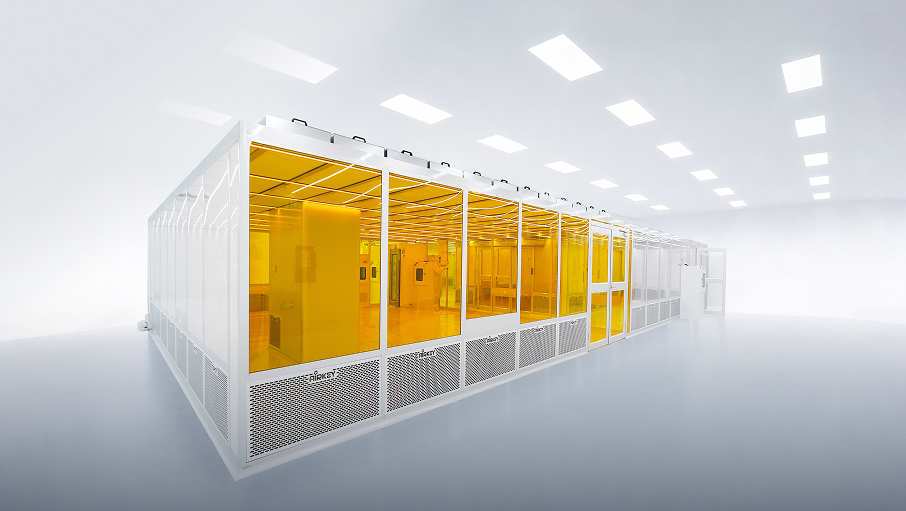
Industrial clean room refers to a specially designed room that removes dust particles, harmful gases, bacteria and other pollutants from the air within a certain spatial range, and controls the cleanliness, pressure, temperature, humidity, airflow (speed, distribution), noise, illumination, static electricity, and even the wavelength of the light source within a certain range of requirements. According to indoor cleanliness classification, it is mainly divided into:
class 1 cleanroom,
class 10 cleanroom,
class 100 cleanroom,
class 1000 cleanroom,
class 10000 cleanroom,
class 100000 cleanroom.
What is a biotech cleanroom?
Biotech cleanroom refers to a clean room where microorganisms in the air are the main controlled objects. For microorganisms floating in the air, such as bacteria, rickettsia, and viruses, it is difficult for them to exist alone in the air, they exist in groups and mostly attach to dust in the air, forming suspended biological particles.
The difference between bio cleanrooms and industrial cleanrooms?
Main distinctions are decoration materials, personnel handling, testing, filtration efficiency, and human influence.
(1) Decoration materials: For bio cleanrooms, regular disinfection and sterilization are required, and interior decoration materials and equipment should be able to withstand drug corrosion; For industrial cleanrooms, the interior decoration and equipment should adhere to the principle of not producing dust, and only need to be regularly wiped to prevent dust accumulation.
(2) Personnel handling: For biological cleanrooms, personnel and equipment must be disinfected and sterilized before entering; For industrial cleanrooms, personnel and equipment enter after being air blown or cleaned with pure water.
(3) Testing: For bio cleanrooms, it is not possible to measure the bacterial concentration in the air in real time. It takes 48 hours of cultivation to get the test result; For industrial cleanrooms: the indoor air dust concentration can be known in real time, continuously detected, and automatically recorded.
(4) Filtration efficiency: For bio cleanrooms, the microorganisms with larger particle sizes need to be removed, lower grade filters can be used to ensure the required high filtration efficiency; For industrial cleanrooms, dust particles larger than 0.5 μ m should be removed.
(5) Human influence: For bio cleanrooms, the main pollution source is human bacteria; For industrial cleanrooms, it's human dust.
Standard of Cleanroom Classification
Cleanrooms classification is based on the cleanliness of indoor air and labeled according to various cleanroom standards, which must be universally recognized for use worldwide, to monitor the true level of cleanroom pollution. What are these standards? They are International Organization for Standardization ISO 14644-1, Federal Standard FED 209E, and GMP Annex 1: European Community Cleanroom Standards
A、International Organization for Standardization 14644-1
What’s ISO-14644, why is it important for your cleanroom?
ISO 14644 is a cleanroom standard developed by the International Organization for Standardization (ISO). ISO has been in existence since 1947, 25 representatives from 65 different countries had a meeting in 1946 to discuss its future. They believed that a non-governmental organization is needed whose only job is to identify best practices in different industries.
Part 1 Classification of Air Cleanliness
Part 2 Cleanroom Testing and cleanroom monitoring specifications to demonstrate continuous compliance with ISO 14644-1
Part 3: Measurement and Testing Methods
Part 4: Cleanroom Design, Cleanroom Construction, and Start up
Part 5: Operation
Part 6: Vocabulary
Part 7: Separate enclosures (clean air hood, glove box, isolator, micro environment)
You will see these sections cited in a very specific way. For example, ISO 14644-1:2015。 This means it refers to Section 14644 of ISO 1 2015 edition. As of the publication of this article, 2015 is the latest version of ISO 14644.
Clean room classification standards issued by the International Organization for Standardization:
|
ISO Class(N) |
greater than or equal to the considered max limit particle size in the table The air concentration limit is calculated according to the formula in 3.2 |
|||||
|
0.1μm |
0.2μm |
0.3μm |
0.5μm |
1.0μm |
5.0μm |
|
|
ISO1Cleanroom |
10 |
2 |
||||
|
ISO 2Cleanroom |
100 |
24 |
10 |
4 |
||
|
ISO 3Cleanroom |
1 000 |
237 |
102 |
35 |
8 |
|
|
ISO 4Cleanroom |
10 000 |
2370 |
1020 |
352 |
83 |
|
|
ISO 5Cleanroom |
100 000 |
23700 |
10200 |
3520 |
832 |
29 |
|
ISO 6Cleanroom |
1000 000 |
237000 |
102000 |
35200 |
8320 |
293 |
|
ISO 7Cleanroom |
352000 |
83200 |
2930 |
|||
|
ISO 8Cleanroom |
3520000 |
832000 |
29300 |
|||
|
ISO 9Cleanroom |
35200000 |
8320000 |
293000 |
FED 209E US Federal Standard
FED 209E is a part of the Federal Standard (Fed Std 209E) , which defines the cleanrooms classification standards. This standard was first published in 1963 and underwent its final major revision in 1992. The FED 209E standard divides cleanrooms into class 1 to 100000, with each class based on the number of particles in a specific air volume. It is worth noting that the US Environmental Science Council officially announced on November 24, 2001, the cancellation and abolition of the US federal standard Fed Std 209E for cleanrooms, and the equivalent use of ISO 14644-1 as the standard for cleanroom classification in the United States. However, due to the fact that the US FED 209E standard is one of the earliest standards in the world for cleanroom testing, the classification of this definition is still widely used today.
|
Classification |
The concentration limit of max particle |
ISO Class Reference |
|||||
|
0.1μm |
0.2μm |
0.3μm |
0.5μm |
5.0μm |
|||
|
M1.5 |
35 |
7.5 |
3 |
1 |
ISO3 |
||
|
M2.5 |
350 |
75 |
30 |
10 |
ISO4 |
||
|
M3.5 |
3500 |
750 |
300 |
100 |
ISO5 |
||
|
M4.5 |
35000 |
7500 |
3000 |
1000 |
7 |
ISO6 |
|
|
M5.5 |
350000 |
75000 |
30000 |
10000 |
70 |
ISO7 |
|
|
M6.5 |
3500000 |
750000 |
300000 |
100000 |
830 |
ISO8 |
EU EU-GMP Appendix 1 Cleanroom Classification Standards
The EU Good Manufacturing Practice Guidelines recognizes the importance of cleanroom conditions and define cleanroom classes based on the level of contamination in both static and operational states. These cleanroom grades are defined in Appendix 1 of the EU GMP European Community Cleanroom Standards(eu gmp clean room classification). GMP standards are widely used in the pharmaceutical and medical industries in the European Union.
According to Annex 1 of the cleanroom GMP standard, it is divided into four levels: Class A, Class B, Class C, and Class D. Each class corresponds to specific cleanliness requirements and is associated with ISO classification. However, including in operation testing standards makes GMP standards more strict than others
EU-GMP Appendix 1 Cleanroom Classification Standards:
|
Class |
Max limit of≥0.5μmparticles amount |
Max limit of≥0.5μmparticles amount |
||
|
Static |
Dynamic |
Static |
Dynamic |
|
|
A CLASS |
3520 |
3520 |
/ |
/ |
|
B CLASS |
3520 |
352000 |
/ |
2930 |
|
C CLASS |
352000 |
3520000 |
2930 |
29300 |
|
D CLASS |
3520000 |
/ |
29300 |
/ |
Microbial Limit Standard
|
Class |
Airborne MicrobeCFU(m³) |
Settling Microbe(DIA.90mm)CFU/4Hours |
Surface Microbe(DIA.55mm)CFU/Petri-dish |
|
A CLASS |
0 |
0 |
0 |
|
B CLASS |
10 |
5 |
5 |
|
C CLASS |
100 |
50 |
25 |
|
D CLASS |
200 |
100 |
50 |
Classify cleanliness by applications
Although it is important to define cleanroom classification standards based on dynamic or static criteria, classification based on different manufacturing industries and cleanroom structure types is also an important reference and guidance. Below is a table summarizing these classifications:
|
Cleanroom Class and Application IntroductionSheet |
|
|
Class |
Application Description |
|
ISO-4 Class 10 |
Mainly used in semiconductor chip wafer manufacturing (semiconductor industry smaller than 2 microns), pharmaceutical industry sterile product production, etc |
|
ISO-5 Class 100 |
Sterile room, including sterile manufacturing processes in pharmaceutical, electronics industry, semiconductor clean workshops, manufacturing of plant products, and high-precision instrument manufacturing workshops. The medical industry mainly involves the products manufacturing of items implanted in the body, surgical procedures, including transplantation, and isolation treatment for patients who are particularly sensitive to bacterial infections, such as bone marrow transplant rehabilitation wards |
|
ISO-6 Class 1000 |
The production of high-quality optical products,also used for testing, assembling aircraft snails, assembling high-quality micro bearings, etc |
|
ISO-7 Class 10000 |
The assembly of hydraulic or pneumatic equipment ;also used in the food and beverage industry in some cases, andalso commonly used in certain medical device workshops |
|
ISO-8 Class 100000 |
Most industrial sectors, such as the manufacturing of SMT electronic products, general equipment manufacturing, manufacturing of smaller componentsapplied for large electronic systems, manufacturing ofhydraulic or pneumatic systems, production of food and beverages, and pharmaceutical industry. |